

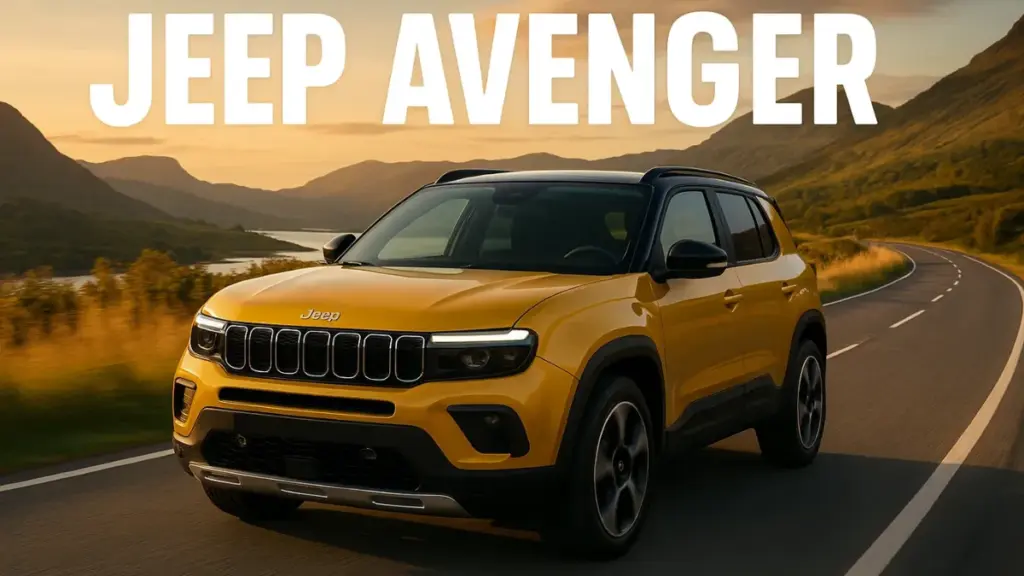
The automotive industry is in the midst of a historic transformation. Electric vehicles (EVs) are no longer futuristic concepts – they are rapidly becoming the present and the future. Jeep, a brand synonymous with ruggedness and off-road freedom, has entered the EV race with its first all-electric SUV, the Jeep Avenger. Positioned as a compact SUV, the Avenger aims to combine Jeep’s legendary DNA with the needs of a modern, eco-conscious urban driver.
This article explores everything you need to know about the Jeep Avenger, including its design, performance, technology, battery life, safety features, market position, and comparisons with rivals.
Jeep’s Vision for the Future
Why the Avenger Matters
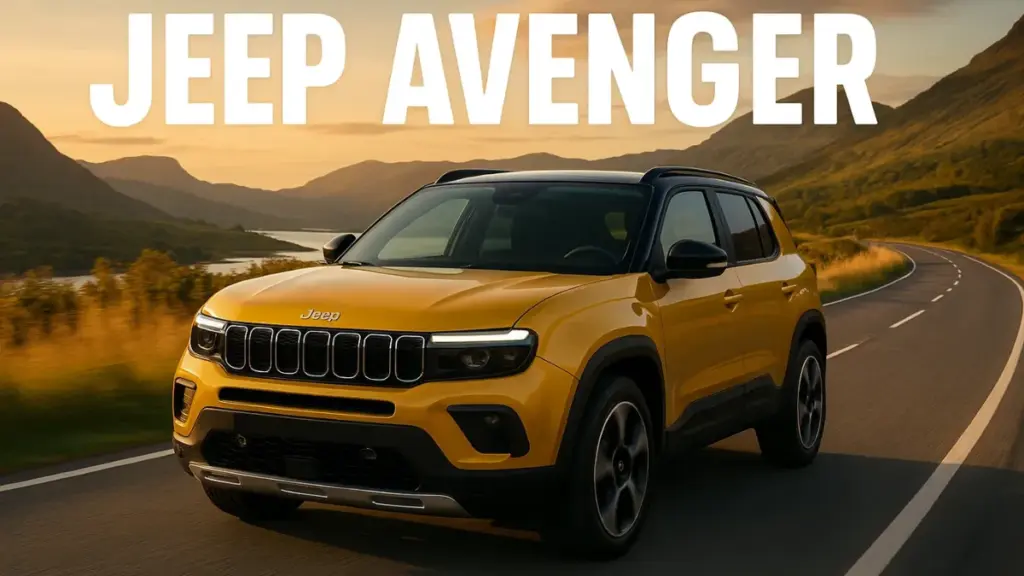
For decades, Jeep has been known for iconic models like the Wrangler, Cherokee, and Grand Cherokee. However, consumer demand is shifting towards smaller, efficient, and eco-friendly SUVs. The Avenger is Jeep’s response – a vehicle designed to cater to European markets and city lifestyles while staying true to Jeep’s adventurous spirit.
Target Audience
- Urban professionals who want a stylish EV SUV.
- Families looking for a compact yet practical electric car.
- Younger generations focused on sustainability without compromising fun.
Exterior Design of the Jeep Avenger
Compact Yet Rugged
The Jeep Avenger is shorter than the Renegade, making it highly maneuverable in tight city streets, but it still looks robust thanks to Jeep’s classic design cues.
- Length: Approx. 4,080 mm
- Width: 1,780 mm
- Height: 1,530 mm
- Wheelbase: 2,560 mm
Styling Highlights
- Iconic seven-slot grille (modernized for EVs).
- Slim LED headlights with daytime running lights.
- Muscular fenders that emphasize off-road heritage.
- Contrasting roof colors for a youthful appearance.
- Aerodynamic body lines to improve efficiency.
Interior Comfort and Cabin Technology
Space and Practicality
Although compact, the Avenger maximizes its cabin space:
- Seating capacity: 5 passengers
- Smart storage solutions with over 30 liters of interior compartments
- Rear seats fold flat to expand cargo capacity
Technology and Infotainment
- 10.25-inch digital instrument cluster
- 10.25-inch central touchscreen with Uconnect system
- Wireless Apple CarPlay & Android Auto
- Over-the-air (OTA) software updates
- Customizable driver profiles
Comfort Features
- Heated seats and steering wheel
- Panoramic sunroof (in higher trims)
- Ambient lighting with multiple color options
Powertrain and Performance
Electric Motor and Battery
The Jeep Avenger is built on Stellantis’s CMP/eCMP platform and powered by:
- Motor output: 115 kW (156 hp)
- Torque: 260 Nm
- Battery: 54 kWh usable capacity (Lithium-ion)
Range and Charging
- WLTP range: up to 400 km (250 miles)
- City range: up to 550 km
- DC fast charging: 20–80% in just 24 minutes (100 kW charger)
- AC charging: 11 kW onboard charger for home charging
Driving Dynamics
- Front-wheel drive layout (AWD version expected in the future)
- Multiple driving modes: Eco, Normal, Sport, Snow, Sand, Mud
- Ground clearance of 200 mm, class-leading in compact SUVs
- 20-degree approach angle, 20-degree break-over angle, 32-degree departure angle
Safety and Driver Assistance
Standard Safety Features
- Autonomous Emergency Braking (AEB)
- Lane Keeping Assist
- Traffic Sign Recognition
- Adaptive Cruise Control
- Blind Spot Monitoring
- Rear Cross-Traffic Alert
Advanced Options
- Semi-autonomous driving with Level 2 assistance
- 360-degree camera system
- Park Assist with automatic steering
Jeep Avenger Models and Trims
Available Trims
- Avenger (base)
- Longitude
- Altitude
- Summit (top trim)
Trim Highlights
- Base: Essential features, 16-inch wheels, LED headlights
- Longitude: Larger wheels, enhanced infotainment
- Altitude: More premium materials, advanced driver assistance
- Summit: 18-inch wheels, panoramic sunroof, full safety suite
Jeep Avenger vs. Competitors
Jeep Avenger vs. Peugeot e-2008
- Both share Stellantis platform, but Avenger has better ground clearance and rugged styling.
Jeep Avenger vs. Hyundai Kona Electric
- Kona offers a larger battery in some trims, but the Avenger excels in off-road capabilities.
Jeep Avenger vs. MG ZS EV
- ZS EV is more affordable, but Jeep offers stronger brand heritage and higher quality materials.
Pricing and Availability
European Market
- Starting price: around €35,000 – €40,000 depending on market and trim.
UK Market
- Expected from £34,000 upwards.
Potential Expansion
Jeep is focusing on Europe first, but global expansion is possible in markets where compact EV SUVs are in demand.
Strengths of the Jeep Avenger
- Stylish yet rugged design
- Practical for both city and light off-road driving
- Competitive EV range (400 km WLTP)
- Fast charging capabilities
- Compact dimensions for urban use
- Comprehensive safety and tech features
Limitations of the Jeep Avenger
- No AWD version available at launch (planned for later)
- Limited rear seat space compared to larger SUVs
- Higher starting price than some budget EV rivals
- Currently focused mainly on Europe
The Future of Jeep Avenger
The Avenger is not just a car – it represents Jeep’s transition into electrification. With sustainability becoming a core factor in buyer decisions, the Avenger bridges the gap between heritage and innovation. If successful, it could pave the way for larger electric Jeeps like the Recon and Wagoneer S.
Conclusion
The Jeep Avenger is a bold step for Jeep, combining compact practicality, electric efficiency, and rugged styling into one package. It stands as one of the most exciting compact EV SUVs in the market today. For urban explorers who want a green vehicle that doesn’t compromise on style or capability, the Avenger is an excellent choice.
As Jeep expands its EV lineup, the Avenger is likely to become a benchmark for compact electric SUVs, blending tradition with innovation in a way few competitors can match.